If you live in a Los Angeles apartment or HOA, SB 712 lets you keep and charge qualifying e-bikes and e-scooters, but only if they meet safety standards like UL 2849 or UL 2272. Landlords and HOAs can still limit noncompliant devices, common-area charging, and unsafe battery setups. You should follow fire codes, use certified chargers, and check insurance requirements. The rules can get more specific once you look closer.
What SB 712 Means for Renters
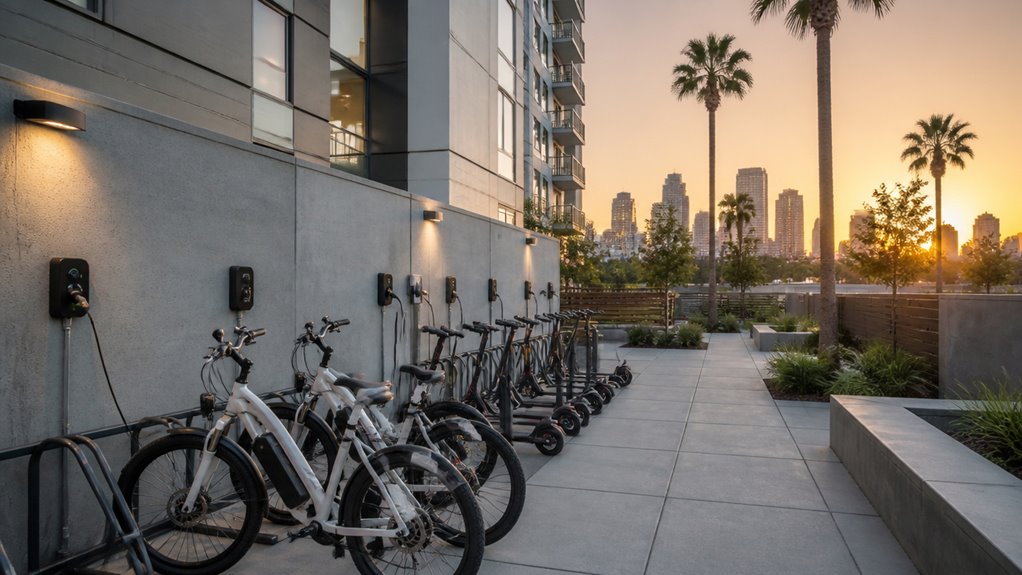
SB 712 gives renters new protections starting January 1, 2024, by limiting a landlord’s ability to ban personal micromobility devices like e-bikes and e-scooters.
You can usually keep one qualifying device per occupant, and you may store and charge it if it meets safety standards or you carry insurance.
Landlords can still limit indoor charging for devices that don’t comply with fire codes or battery safety guidance from the State Fire Marshal.
You should review your lease, because SB 712 doesn’t rewrite restrictions you already accepted.
If you live under HOA rules, check whether they affect shared spaces or storage access.
These rules aim to reduce fire risk while letting you use your device responsibly.
Which E-Bikes and E-Scooters Qualify
You can store and charge only devices that meet the law’s qualifying standards, so you’ll need to check both the model type and its safety certification.
In California, that usually means a Class 1, 2, or 3 e-bike, or an e-scooter with handlebars and a top speed of 15 mph, along with UL 2849 or UL 2272 certification.
You should also confirm that you’re not exceeding device limits, because non-compliant units, including some over 125 watts, may be restricted under newer rules.
Qualifying Device Standards
To qualify for indoor storage and charging in apartments and HOAs, e-bikes must meet recognized safety standards such as UL 2849 or EN 15194, while e-scooters must comply with UL 2272 or EN 17128.
These qualifying device standards give you a clear safety certification benchmark and help you follow local charging rules. Under SB 712, you may also find that non-electric devices, or devices with proper insurance coverage, can qualify if they meet the new requirements.
Landlords can still deny indoor charging when a device lacks the right certification or insurance, so you should verify compliance before you plug in.
Device Type Limits
Not every e-bike or e-scooter qualifies for indoor storage and charging, even when it has the right safety label. You need to check the device type first.
California recognizes three e-bike classes: Class 1 pedal-assist up to 20 mph, Class 2 throttle-assisted up to 20 mph, and Class 3 pedal-assist up to 28 mph.
For e-scooters, you can only count two-wheeled devices with handlebars and a top speed of 15 mph.
Under SB 712, you may keep one qualifying device per occupant inside if it meets UL 2849 or UL 2272, or another approved safety or insurance rule.
If you misclassify a powerful device, you could face legal liability, so verify the class before storage and charging.
What Landlords Can Still Ban
Even where local rules limit broad bans on e-bikes and e-scooters, landlords can still set specific safety restrictions to reduce fire risk.
You can prohibit charging non-compliant devices that don’t meet UL 2849 or UL 2272 standards, because a lithium-ion battery failure can spread fast.
You can also bar repairs that involve batteries or motors unless qualified service is used and building codes are met.
DIY modifications and off-brand chargers can be banned, since they increase overheating and fire danger.
You may also be blocked from charging batteries in hallways, stairwells, or other common areas.
In some cases, you can require liability insurance for non-compliant devices, so damage and accident costs don’t fall entirely on the property owner or other tenants.
What HOA Rules Are Still Allowed
HOAs face similar limits, but they can still adopt reasonable rules that focus on safety and property protection.
You’ll usually see HOA rules that set speed limits, no-riding zones, and clear storage standards for e-bikes and e-scooters. Under the Davis-Stirling Act, your HOA can’t ban these devices outright, but it can regulate them when it has a real safety reason.
That matters most where fire risks from lithium batteries are a concern. Your HOA may also limit charging in common areas and reserve certain spaces for approved use.
Local ordinances can still control sidewalk riding for e-scooters, while e-bikes may face different access rules. If your HOA enforces fines, AB 130 generally caps them at $100 unless the issue involves health or safety.
E-Bike Battery Safety Rules
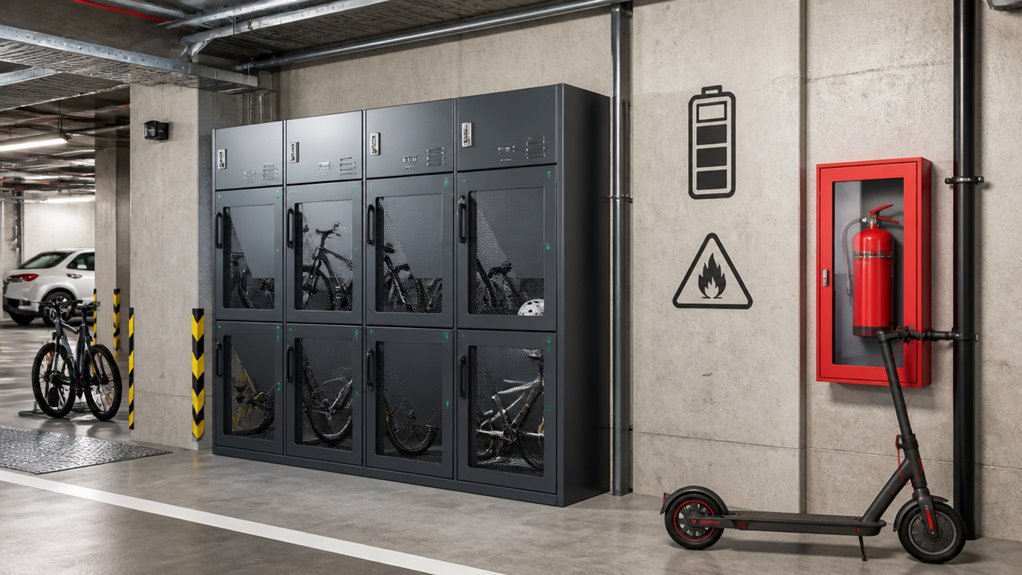
You should treat e-bike batteries as a fire risk and charge them only on hard, non-flammable surfaces like tile or concrete.
Keep charging indoors, away from hallways or other common areas, and use a fire-safe charging bag when you can.
Stay with the battery while it charges, and follow California Office of the State Fire Marshal safety guidance to reduce overheating and fire hazards.
Battery Fire Risks
Lithium-ion batteries power most e-bikes and e-scooters, but they can overheat and ignite when users charge them with damaged equipment, unsafe chargers, or poor charging habits. You should treat these battery fire risks seriously, especially in apartments and HOAs. California fire officials recommend certified chargers and keeping batteries away from common areas and flammable materials. You also need products that meet safety standards such as UL 2849 or UL 2272, because those ratings help lower fire likelihood and support local compliance. Charge your device on a hard, non-flammable surface, and consider a fire-safe charging bag for extra protection. If you’re unsure about your building rules, ask property management about e-bike regulations and approved charging requirements so you can reduce hazards before they start. Routine maintenance of battery-related safety equipment and chargers helps ensure they function properly when needed.
Safe Charging Practices
Safe charging habits reduce the fire risks tied to e-bike batteries and help keep homes, apartments, and shared buildings safer.
For safe charging practices, always place e-bikes and their batteries on hard, non-flammable surfaces like tile or concrete. Don’t charge in bedrooms or near exits, and keep the area ventilated and clear of flammable items.
Use only certified chargers that meet safety standards, and plug them directly into wall outlets, not extension cords or low-cost power strips.
Never leave a battery unattended for long periods, especially while you sleep or’re away from home. If you charge indoors, consider a fire-safe charging bag for added protection.
These steps lower the chance of a fire and help you protect people, property, and common areas.
Storage Options for Noncompliant Devices
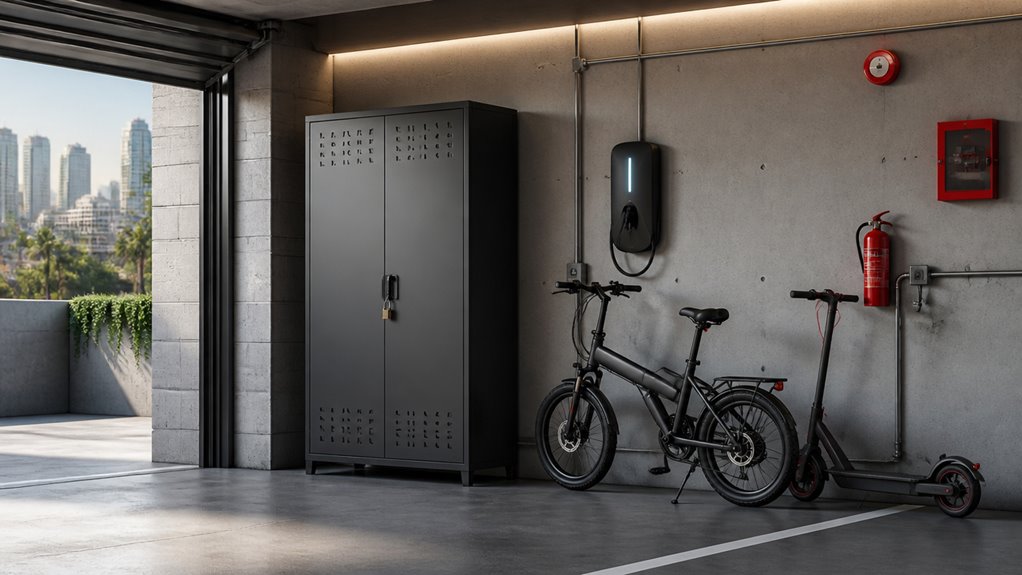
When a resident owns a noncompliant e-bike or e-scooter, indoor charging is usually off-limits in Los Angeles apartment complexes and HOA communities.
However, landlords may still offer secure on-site storage as an alternative. In these cases, property management may prohibit charging inside units and instead provide a designated area for storage and charging, if codes allow it.
You should expect the space to stay on-site, remain accessible only to residents, and include at least one standard outlet per device.
These storage options still must meet fire safety rules and building codes, so you need to confirm that the arrangement is lawful.
Check your lease and local regulations before you store a device, because violations can lead to fines or eviction.
When Insurance Is Required
If your e-bike or e-scooter doesn’t meet the required safety standards, California’s SB 712 can allow a landlord to require liability insurance before you store or charge it on the property.
You may need to show proof of insurance if your device lacks UL 2849 or similar approval, especially when you use common areas for charging.
Basic renters or homeowners policies often treat e-bikes like motor vehicles, so you might need an add-on or separate policy. That coverage helps protect you against battery-related fires, smoke damage, and other liability claims.
Before you bring a noncompliant device onsite, check your policy and ask an insurance broker who understands e-bike risks.
Good coverage can keep you compliant and reduce financial exposure if something goes wrong.
Frequently Asked Questions
Can an Hoa Ban Electric Bikes?
No, you usually can’t ban electric bikes outright. You can set electric bike regulations through community guidelines, but they must be reasonable, safety-based, and consistent with state law.
You may limit storage, charging, and use in shared spaces to protect fire protection systems and residents. If your rules are arbitrary or too broad, they could be challenged.
Focus on safe parking, charging areas, and clear enforcement.
Can I Charge My Ebike in My Apartment?
Yes, you can usually charge your ebike in your apartment, but safety concerns matter more than convenience.
You should check your building rules, then compare charging options and choose a compliant bike with a safe battery.
Charge it on a hard, nonflammable surface, away from exits and sprinklers, and avoid extension cords.
These precautions help protect fire systems, reduce risk, and limit energy costs while keeping your apartment safer.
Can You Charge an Electric Scooter in an Apartment?
Yes, you can usually charge an electric scooter in your apartment if it meets California safety rules and your lease doesn’t forbid it.
Keep charging locations inside your unit, not in hallways or stairwells, to reduce safety concerns from lithium-ion batteries.
Use the manufacturer’s charger, follow instructions, and watch energy consumption.
If your scooter lacks required certification, your landlord may require liability insurance before you charge it indoors.
What Are the New Laws for Ebikes and Escooters in California?
California’s new rules let you store and charge one qualifying e-bike or e-scooter per occupant in housing, if you follow fire safety rules and use certified batteries.
Landlords can’t impose blanket bans, but they may require proof of insurance or restrict unsafe indoor charging.
These electric vehicle regulations support sustainable transportation options and reflect urban mobility trends, while protecting you through fire protection systems and other safety measures.
Wrapping It Up
By following California’s charging rules, you can keep your apartment or HOA on safer ground while still using your e-bike or e-scooter. SB 712 opens the door, but it doesn’t remove every restriction or risk. Treat battery care like a circuit breaker for your peace of mind: one small mistake can trip a much bigger problem. Check your device, confirm your policy, and store or charge it the right way before trouble sparks.