You should build a smoke-ready hotel plan that checks HVAC systems, upgrades filters to MERV 13 or higher, and reduces outdoor air intake during smoke events. Add portable HEPA air cleaners to guest rooms, lobbies, and other shared spaces, and seal gaps around doors and windows to limit infiltration. Use low-cost PM2.5 sensors to track conditions, then train staff to act fast and communicate clearly, so you can keep indoor air safer when smoke arrives and learn more below.
Hotel Smoke-Ready Operations Plan Basics
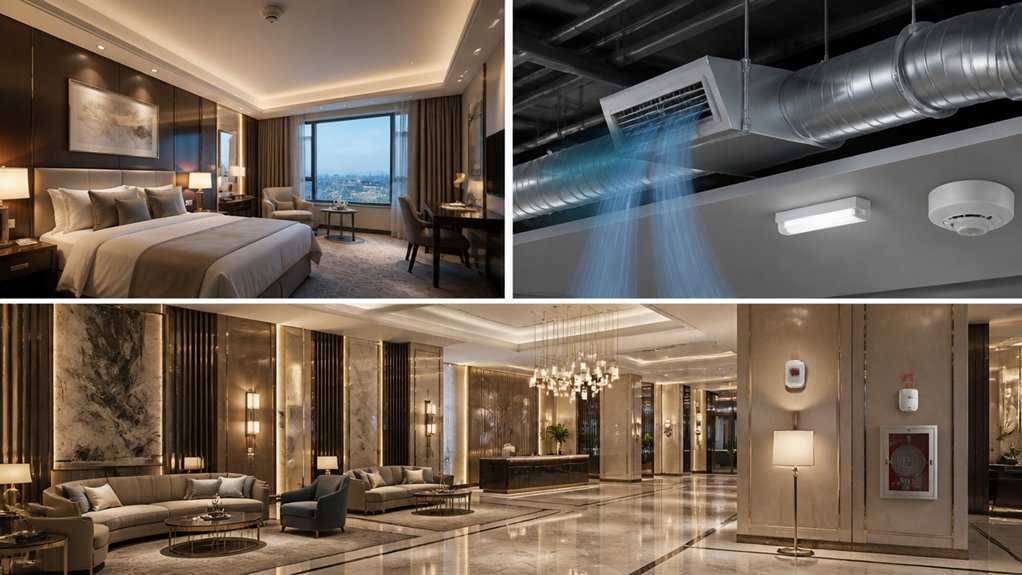
A hotel smoke-ready operations plan starts with prevention and quick response. You protect Quality by inspecting your HVAC system regularly, upgrading filters to MERV 13 or higher, and replacing them on schedule. That step helps reduce smoke infiltration and supports better indoor air quality during wildfire events. You should also set up clean air spaces in lobbies and guest areas with portable air cleaners to remove particulate matter. Build a smoke readiness plan that includes training so staff can limit outdoor air intake and act fast. Use low-cost sensors to monitor indoor PM2.5, then adjust operations when readings rise. This emergency response approach helps you stay compliant with public health guidance and keeps conditions safer for guests and staff. To ensure reliable fire alarm systems, schedule annual inspections and maintenance by licensed, certified technicians.
Prepare Guest Rooms for Smoke Events
When wildfire smoke is a risk, prepare guest rooms so they can stay as clean and comfortable as possible.
You should equip HVAC systems with MERV 13 or higher filters to trap fine particulate matter during smoke events. Inspect units often, reduce outside air intake when conditions allow, and complete filter maintenance on schedule.
Set up clean air spaces in rooms with portable HEPA air cleaners or other air purifiers to support indoor air quality. Keep extra filters, portable HEPA air cleaners, and replacement supplies ready for fast deployment.
Train staff to explain smoke readiness steps, so guests can reduce guest exposure and keep windows closed when advised. Clear, simple instructions help you protect comfort, limit smoke infiltration, and maintain safer room conditions throughout a smoke event.
Fire safety preparedness also includes routine fire extinguisher maintenance to ensure extinguishers function properly if emergencies occur.
Protect Lobbies and Shared Spaces
Protect lobbies and other shared spaces by creating clean-air areas with portable HEPA air purifiers, which can help reduce fine smoke particles during wildfire events.
You can improve indoor air quality by placing PM2.5 monitoring sensors in the lobby and checking readings often.
Keep your smoke readiness plan current, and inspect air filtration systems regularly so they work when wildfire smoke arrives.
Use high efficiency filters, such as MERV 13 or higher, where your equipment allows, to limit particle buildup.
Seal gaps around windows and doors to reduce infiltration, and post clear updates for guests about cleaner air zones.
These steps support guest comfort, give you better control during smoke events, and help you respond quickly without disrupting normal hotel operations.
In addition, smoke alarms are essential for early detection and faster action during any indoor fire or smoke emergency.
Adjust HVAC for Wildfire Smoke
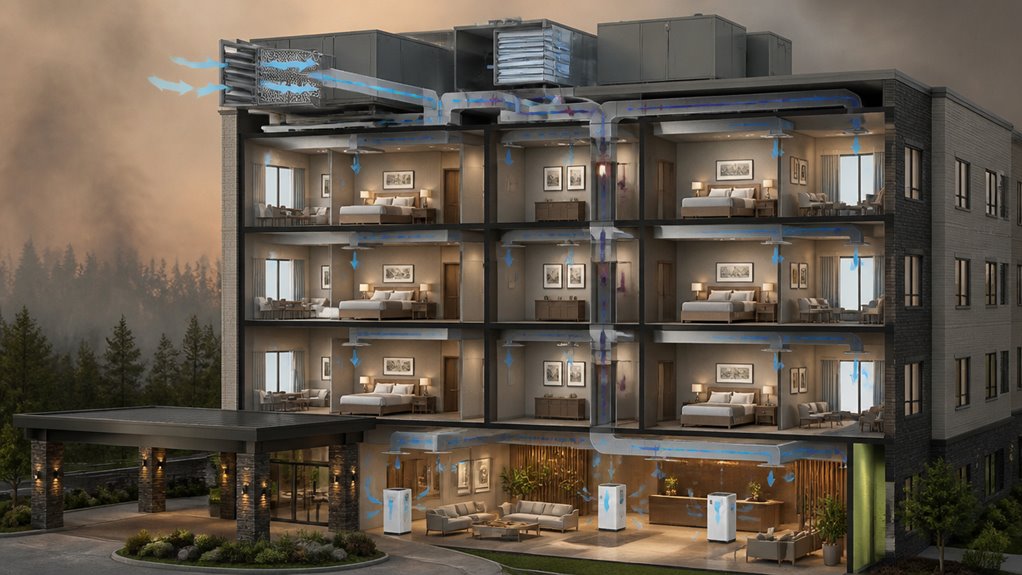
After you’ve set up cleaner-air zones in shared spaces, adjust the HVAC system so it doesn’t pull in unnecessary wildfire smoke.
During smoke events, you should reduce outdoor air intake, disable outside-air economizers, and keep HVAC systems recirculating filtered indoor air.
Use high-efficiency filters, at least MERV 13, to capture fine particulate matter and improve indoor air quality.
Facility managers should inspect units regularly, seal leaks, and make sure filters fit tightly so smoke can’t bypass them.
Real-time monitoring helps you confirm when conditions change and when your smoke readiness actions are working.
Monitor PM2.5 and Train Staff
Install low-cost PM2.5 sensors in guest rooms and lobbies so you can track indoor air quality in real time during wildfire smoke events. Use the data to spot smoke infiltration early and adjust HVAC systems before conditions worsen.
- Watch PM2.5 sensors continuously
- Reduce outdoor air intake during smoke events
- Use communication strategies to update guests
- Deploy HEPA air purifiers as supplemental filtration
When readings rise, you should move guests to cleaner spaces and start training staff to recognize warning signs, operate HVAC controls, and place portable filtration where it helps most.
Run regular workshops so teams know how to respond fast, document actions, and keep guest rooms and common areas safer. Clear protocols help you act consistently, protect indoor air quality, and maintain service during smoke episodes.
Frequently Asked Questions
How Often Should the Smoke-Ready Plan Be Reviewed and Updated?
You should review and update the smoke-ready plan at least annually, and sooner after smoke detection incidents, equipment changes, or regulatory compliance updates.
Reassess evacuation procedures, staff training, air quality controls, communication strategies, incident response steps, equipment maintenance, and emergency drills whenever operations change.
Regular reviews help you protect guest safety, keep procedures current, and guarantee the plan matches actual building conditions and local fire protection requirements.
Who Is Responsible for Authorizing Guest Room Relocations During Smoke Events?
You usually authorize guest room relocations through the incident response leader, often the on-duty manager, after smoke detection and room assessment confirm need.
If you think delays help, they don’t; fast decisions support guest safety and risk management.
Follow emergency protocols, relocation procedures, and communication hierarchy, while keeping policy compliance.
Staff training should clarify who approves moves, so you can act quickly and document each step during smoke events.
What Guest Communication Templates Should Hotels Use During Smoke Emergencies?
Use preapproved templates for emergency alerts, smoke notifications, evacuation procedures, and air quality updates.
You should send them through SMS, email, app messages, and front desk scripts to protect guest safety.
Train staff to give consistent information, log incident reporting, and answer questions clearly.
Include service recovery steps, request guest feedback after the event, and keep communication channels open until conditions improve and normal operations resume.
Which Vendors Should Hotels Prearrange for Emergency Air Filtration Support?
You should prearrange portable HEPA rental vendors, HVAC remediation firms, and industrial cleaning companies, like a fire crew lining up water before the first spark.
These partners protect Air Quality through Filtration Systems, while Vendor Contracts define Emergency Procedures, Response Time, and Cost Analysis.
Use Training Sessions to cover Equipment Maintenance, Compliance Standards, and System Upgrades, so you can act fast when smoke threatens guest areas and indoor safety.
How Should Hotels Document Smoke-Related Incidents for Insurance Claims?
You should document smoke-related incidents with detailed incident reporting, photos, timestamps, witness notes, and HVAC logs.
Then link them to insurance documentation for claim procedures. Include a risk assessment, incident analysis, and any guest safety actions taken.
Keep your insurance liaison informed, follow policy updates, and note legal considerations.
Train staff to record facts consistently, so you can support claims and reduce disputes after smoke exposure or cleanup costs.
Wrapping It Up
When smoke threatens, you can keep your hotel running with a clear plan. Seal guest rooms, limit lobby exposure, and tune your HVAC to reduce smoky air. Watch PM2.5 readings, train your team, and respond fast as haze presses against windows like gray fog. With steady preparation, you’ll protect guests, support staff, and maintain safer indoor spaces until outdoor conditions improve. Focused action turns a smoky disruption into a controlled, manageable event.