To guarantee safety, wildland firefighters must adhere to strict protocols. You need to wear flame-resistant clothing and supportive leather boots. Engage in risk assessments, conduct regular gear inspections, and limit smoke exposure. Undergo fitness testing and training, guaranteeing you’re ready for physically demanding tasks. Accurate documentation and resource tracking during incidents hold importance. Employ health surveillance programs to monitor potential long-term impacts. Explore practices that enhance decision-making and safety compliance, improving firefighting effectiveness.
Core Personal Protective Equipment (PPE) Requirements
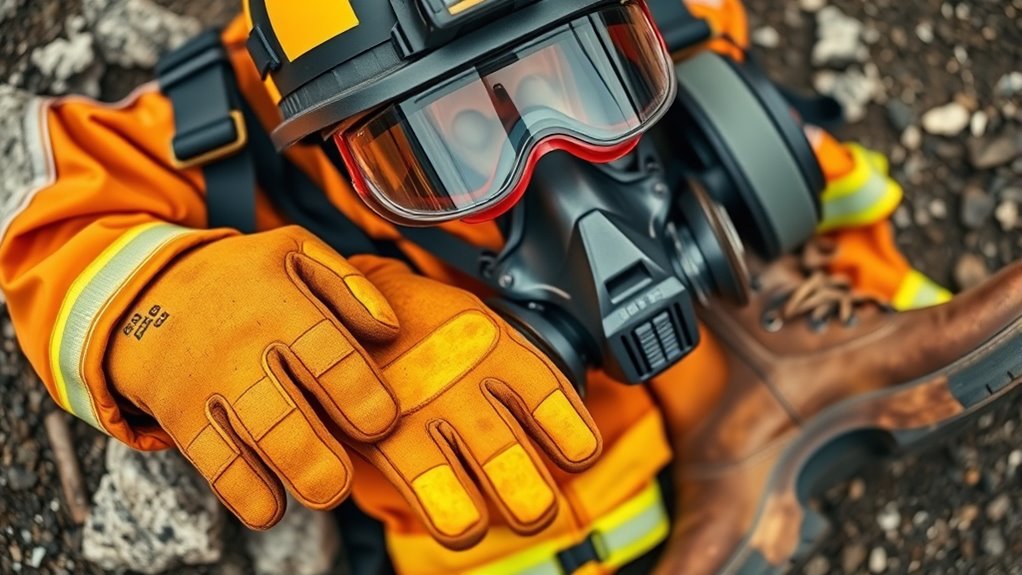
When it comes to wildland firefighting, having the right core personal protective equipment (PPE) is vital for safety and effectiveness. Your gear must include flame-resistant clothing made from Nomex® or aramid-based fabrics.
Confirming PPE compliance checks are routine will help identify issues before they become major problems. Keep your protective gear in top shape by maintaining it properly—wash FR clothing separately and replace anything torn or contaminated to retain its protective qualities.
Leather boots with Vibram® soles and proper ankle support are important for traversing rough terrain safely. Regular maintenance, including inspecting and cleaning your equipment, guarantees that it functions correctly amid the demanding conditions you face. Additionally, understanding fire safety certification is essential for preparedness in fire emergencies.
Risk Management and Hazard Mitigation
In wildland firefighting, risk management and hazard mitigation are essential to ensuring safety and operational success. You must conduct a thorough risk assessment, which involves hazard identification to spot potential dangers like weather and terrain.
Follow the 5-step risk process from the Incident Response Pocket Guide (IRPG), which includes situation awareness, hazard assessment, control development, implementation, and evaluation. Job Hazard Analysis is vital for high-risk tasks, especially those involving non-standard personal protective equipment (PPE).
You need to distinguish between subjective hazards, like equipment use, which you can control, and objective hazards, which are unavoidable. Strategic concerns require evaluating communities and resources before committing to action. Additionally, incorporating ground-based strategies into your risk management framework can enhance overall safety and effectiveness in wildfire suppression efforts.
Training and Certification Standards
In wildland firefighting, maintaining peak physical condition is vital, which is why annual physicals and fitness standards are essential for ensuring safety and readiness. You’ll also engage in rigorous fire shelter deployment training, a critical skill that can be life-saving during emergencies. Understanding the importance of fire shelters is crucial for effective preparation in dangerous situations.
Annual Physicals and Standards
How do wildland firefighters confirm they’re physically prepared for the demanding tasks ahead? They undergo triennial physical exams, essential for those performing arduous duties.
These exams, combined with annual health assessments, guarantee firefighters meet strict physical fitness standards. You must complete self-certifications yearly, checking blood pressure and filling out questionnaires through the eMedical system. This process is imperative for maintaining your readiness.
When you take the Work Capacity Test, you’ll face a 3-mile hike with a 45-pound pack, proving your aerobic and muscular fitness.
Don’t forget to bring required documentation like your ID and medical history forms. If you’re in pay status, you can get reimbursed for exam and travel expenses using Form FS6500-229, assuring no financial burden.
Fire Shelter Deployment Training
Fire shelter deployment training is an essential part of your preparation as a wildland firefighter. Each year, you must engage in deployment exercises under realistic field conditions.
You’ll practice with full gear, including your gloves and hardhat, and work through simulated scenarios with strong winds to guarantee you’re ready. It’s vital to master the 15-20 second deployment time to enhance shelter effectiveness when escape routes are blocked.
You’ll learn to select sites with minimal fuels, avoiding narrow draws that funnel flames, while adhering to protocols like positioning your feet toward the advancing fire.
Post-training, mandatory tests confirm you grasp these safety measures, and periodic reviews of incident reports help refine your skills and update your techniques.
Health and Exposure Mitigation Strategies
While wildland firefighting is a crucial and heroic endeavor, it presents significant health risks that require strategic mitigation. To protect yourself, focus on exposure reduction and medical surveillance.
Minimize mopup operations and rotate crews to reduce smoke exposure. Equip dozer operators with air-filtration systems and limit shift durations, aligning with OSHA standards. Adopt interim Occupational Exposure Limits for smoke, as traditional limits fall short.
Implement medical surveillance programs to monitor health impacts like arterial stiffness and respiratory function. Regularly conduct cross-season health assessments and track biomarkers such as PAHs and CO.
Establish registries for studying long-term health trends, including cancer risks. By following these strategies, you can safeguard your health while performing your critical duties.
Fire Shelter Deployment and Emergency Protocols
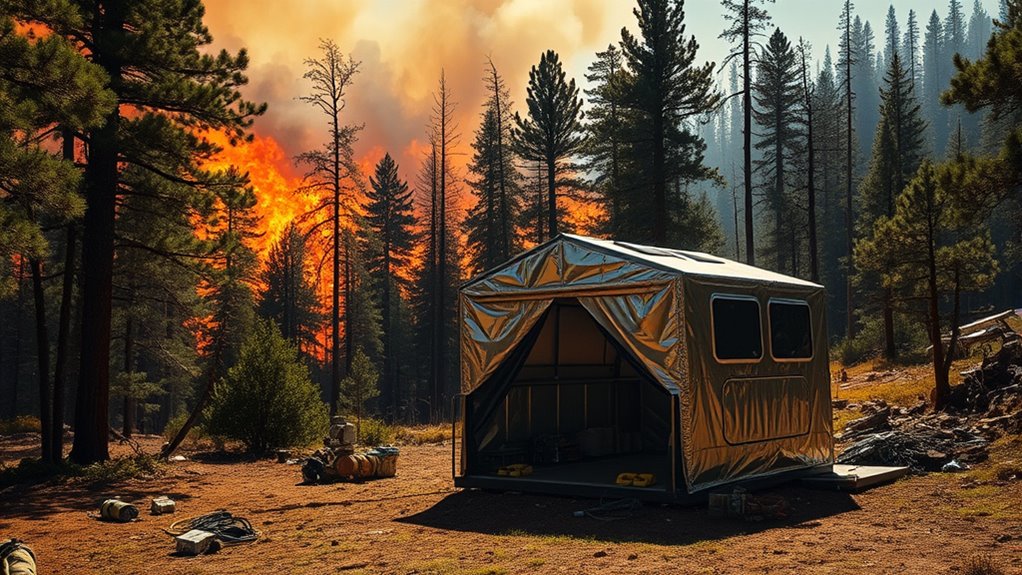
When battling unpredictable wildfires, deploying a fire shelter becomes a critical last-resort action for survival. Your survival hinges on proper shelter selection and deployment timing, especially when escape routes or safety zones are blocked.
Crew leaders usually decide when to deploy, but if you’re alone, trust your training and instincts. Remember, the probability of surviving during deployment is about 50%, so every second counts.
- Select a site: Look for natural firebreaks or burned areas.
- Avoid funnels: Stay away from narrow draws and chutes.
- Clear debris: Clear a 4’x8’ area if possible.
- Deploy properly: Follow the steps to anchor and orient the shelter.
- Stay ready: Keep shelters stored correctly to guarantee they’re in peak condition.
Always prioritize safety and quick thinking.
Incident Reporting and Documentation Procedures
In the unpredictable world of wildland firefighting, after mastering emergency protocols like fire shelter deployment, it’s crucial to focus on how incidents are reported and documented. Proper incident documentation guarantees reporting accuracy, essential for safety and accountability.
Start by recording the incident type early, noting its location using precise GPS coordinates. Document all hazard assessments, weather impacts, and fire behavior carefully. It’s advised you submit monthly reports to the USFA through NFIRS, even if there’s no activity.
Serious injuries require immediate medical response, scene security, and evidence preservation. For ongoing incidents, keep status updates flowing to dispatch, track resources diligently, and report any weather changes.
These practices guarantee no unreported incidents and maintain data integrity for public databases.
Leadership and Safety Prioritization in Operations
To lead effectively in wildland firefighting, you must prioritize safety in every operation. Leadership clarity is essential, ensuring everyone understands the mission and their role.
You should engage in constant risk communication to keep your team informed and vigilant. Implementing a systematic risk evaluation process helps balance operational goals with safety.
- Commander intent clarity: Set clear objectives for decision-making.
- Risk assessment implementation: Adopt daily assessments to manage hazards.
- Subordinate empowerment: Encourage initiative while maintaining authority.
- Operational accountability: Work with safety officers to enforce protocols.
- Post-incident review: Conduct reviews to improve safety measures.
Conclusion
In the demanding field of wildland firefighting, prioritizing safety is essential. Did you know that wearing the right personal protective equipment can reduce firefighter injuries by up to 50%? By adhering to strict safety protocols, including effective risk management and thorough training, you’re not only safeguarding yourself but also ensuring the success of the entire operation. Remember, quick and accurate incident reporting, alongside leadership that emphasizes safety, plays an important role in maintaining a secure firefighting environment.