For a Los Angeles church event or street fair, submit your site plan to LAFD at least five business days early, and be ready for an inspection. Place current-tag extinguishers onsite, including a 5 lb ABC for cooking and a Class K for oil use, plus a 10-B:C unit in each concession area. Keep propane outside tents, generators 20 feet away, cords protected, and exits, hydrants, and evacuation routes clear so you can stay compliant and safer overall.
Los Angeles Fire Permit Rules for Summer Events
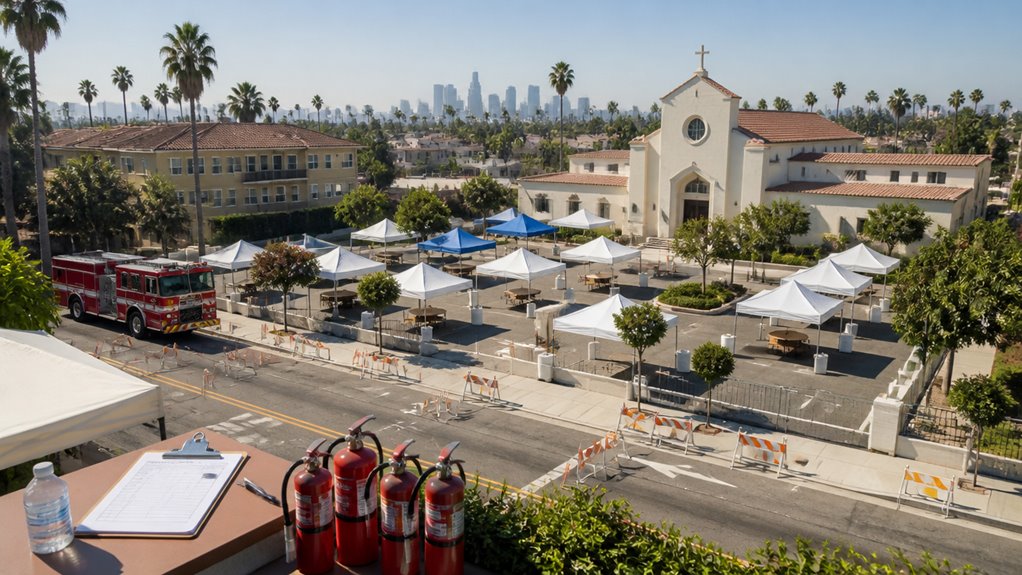
Before you host a summer event in Los Angeles, you’ll need to follow the Fire Department’s permit rules and submit a site plan at least five business days in advance, showing the layout, operations, and any temporary structures. You should send sponsor and promoter details, because the Fire Department reviews how you’ll use each area before it approves the event. If you plan cooking or fuel use, include the locations of tents, trucks, and any hazardous materials. Keep cooking tents 10 feet from other structures and provide flame retardant certification. During Fire Safety Inspections, inspectors may verify access routes, so keep fire lanes at least 15 feet wide and unobstructed. For LPG and other hazardous materials, use certified handlers and secure any permits based on stored amounts. Consider contacting FPLA at +1-323-709-7372 to confirm requirements for fire safety inspections before submission.
Required Extinguishers and Inspection Tags
For summer public events in Los Angeles, you’ll need the right extinguishers onsite and ready to use from the start.
Bring at least one 5 LB ABC fire extinguisher for all cooking equipment, and add a Class K unit plus an ABC extinguisher when you use cooking oil.
Routine maintenance helps ensure extinguishers work properly during emergencies.
- Check each fire extinguisher before setup.
- Verify the inspection tag shows service within the last 12 months.
- If you operate a mobile food truck, confirm its inspection tag from a licensed extinguishing company is current for no more than six months.
You should place every unit onsite before guests arrive, so you can respond fast if a fire starts.
Keeping the right equipment and current tags helps you stay compliant and protects your event.
LAFD Rules for Food Vendors, Tents, and LP Tanks
When you’re planning food service at a summer event in Los Angeles, LAFD requires you to meet specific safety rules for vendors, tents, and LP tanks. You need to keep cooking tents at least 10 feet from other tents or structures, and you should have flame retardant certification papers ready for inspection. For Fire Safety, every cooking area must include a Class K extinguisher and a 5 LB ABC extinguisher with current tags dated within 12 months. Keep propane tanks and piping undamaged, secure, and outside tents, with relief valves aimed away from people. Use heavy-duty, all-weather extension cords, secured so they don’t cross walkways. Submit your site plan five business days early, so LAFD can review vendor locations and operations for compliance.
Safe Power, Extension Cords, and Generators
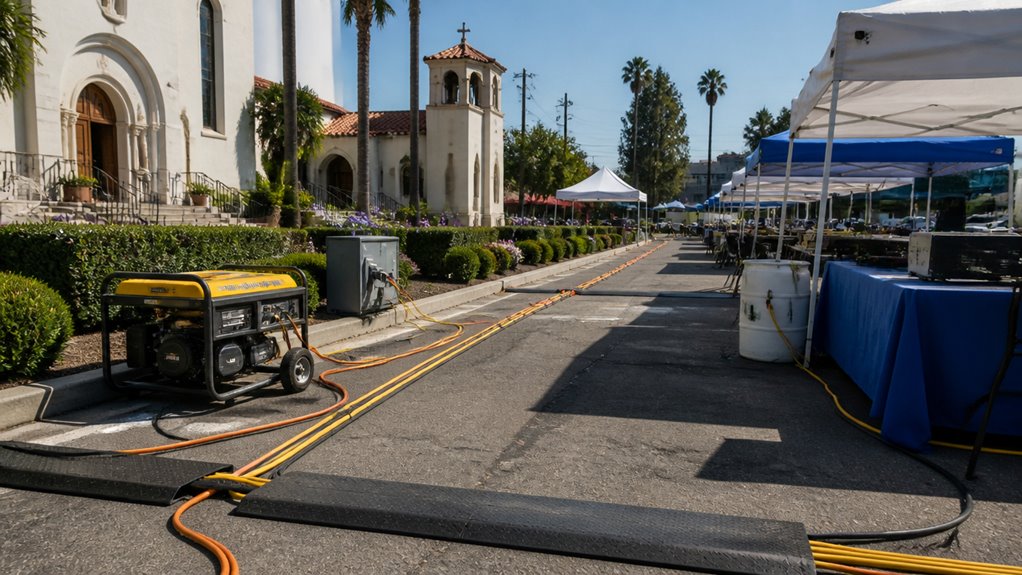
You should use only heavy-duty, all-weather extension cords for event power needs, since household cords aren’t permitted and can create electrical hazards.
Keep every cord secured and out of public pathways so you reduce tripping risks and help prevent damage.
Place generators at least 20 feet from tents and structures, and inspect both cords and generators before use to make sure they’re in safe working condition.
Heavy-Duty Outdoor Cords
Heavy-duty, all-weather extension cords should power outdoor summer events, since they’re built to handle weather exposure and heavier electrical loads. You protect fire safety by choosing only heavy-duty cords, never household models, and keeping them clear of combustible materials.
- Inspect every cord before use, and replace any that’s frayed, cracked, or damaged.
- Secure cords so they don’t cross walkways, block exits, or create trip hazards for guests or responders.
- Use only outdoor-rated cords that match the equipment load and event conditions.
When you rely on approved cords, you reduce electrical overheating and help keep your site safer.
If you use generators, pair them with appropriate outdoor-rated cords, and follow all safety standards so power stays reliable without adding preventable risk.
Generator Placement And Clearance
Although generators can keep summer events powered, they also create fire and ventilation risks if they’re placed too close to tents or other structures. You should follow generator placement rules and keep each unit at least 10 feet from walls, canopies, and stored materials to reduce fire hazards.
Check that every generator has a current inspection tag from a licensed extinguishing company, with service completed within the last six months. Use only heavy-duty, all-weather extension cords rated for the load, and replace any cord that shows wear or damage.
Secure cords so people won’t trip, and keep access to generators and electrical equipment clear for quick emergency response. Good spacing, inspection, and cord control help you protect guests, volunteers, and property throughout the event.
Access Routes, Exits, and Evacuation Plans
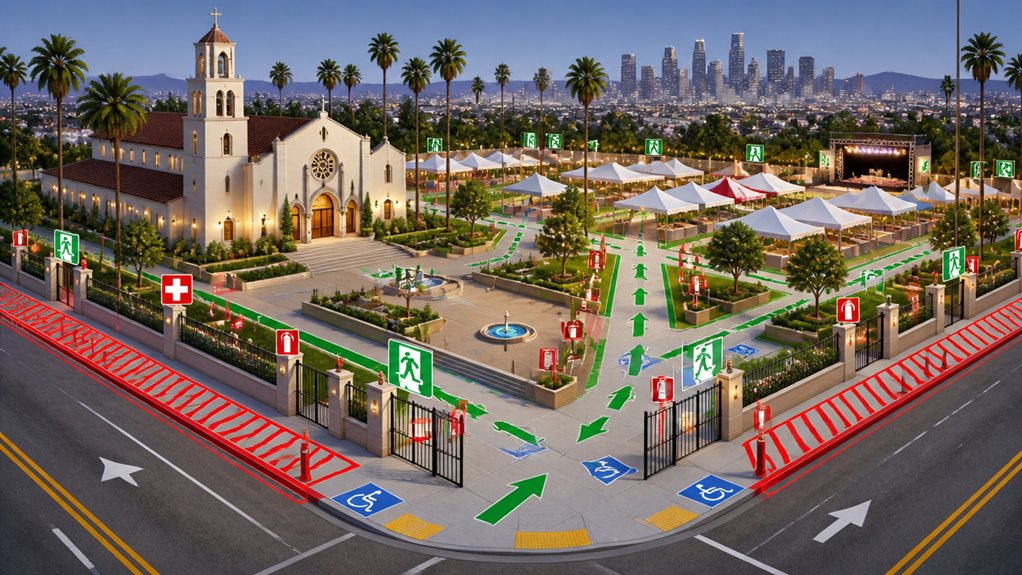
You should keep all access routes and exits clearly marked, unobstructed, and wide enough for fire apparatus, with at least 15 feet of clearance.
You’ll also need an updated evacuation plan with visible maps and routes, and you should review it regularly with staff and volunteers.
Before the event starts, confirm that hydrants, alarm boxes, lighting, and all entrances and exits stay clear, and arrange a fire department site inspection to catch hazards early.
Clear Fire Access Routes
Clear fire access routes are essential at summer events because emergency crews need a fast, unobstructed path to reach the venue and respond to a fire. You should keep clear fire access routes at least 15 feet wide, and you should inspect them every day before opening.
The Fire Marshal can review your layout, and you need to follow the Safety Code exactly.
- Keep apparatus lanes open.
- Post evacuation plans throughout the venue.
- Remove obstructions from exits and access paths.
You should mark visible exits, maintain them in working order, and make sure staff knows how to guide guests out quickly.
Before the event, coordinate with local fire authorities to approve your access routes and evacuation procedures. This helps you stay compliant and ready for emergencies.
Marked Exits And Paths
Marked exits and well-defined paths help guests and responders move quickly if an emergency develops at a summer event. You should place illuminated signs at every exit so people can spot marked exits under bright sun or low light.
Keep access routes open, and make sure each path stays at least 15 feet wide for fire apparatus and safe movement. Post evacuation plans in visible spots across the venue, and show attendees the routes they may need.
Inspect doors, gates, and walkways before the event, then clear any boxes, cords, or furniture that block movement. These steps support fire safety and reduce confusion if conditions change fast.
You should also review your layouts against local code so your evacuation plans stay current and practical for public gatherings in Los Angeles.
Evacuation Plan Coordination
A well-coordinated evacuation plan helps everyone move quickly and safely when an emergency starts. You should review Fire Safety access routes before guests arrive, and the Department shall confirm every emergency vehicle lane is at least 15 feet wide and clear.
- Mark exits with illuminated signs, keep them unblocked, and make sure attendees can reach them easily.
- Share your evacuation plan with staff and volunteers, including multiple exit routes and designated assembly areas, before the event begins.
- Run a fire drill so people know the routes and understand how to respond.
Keep fire lanes open, and protect visibility and access to hydrants and alarm boxes throughout the site.
Submit Site Plans and Pass Fire Inspections
Before your event opens, you’ll need to submit a site plan at least five business days in advance, showing where activities, materials, and operations will take place so the Department can verify fire safety compliance.
When you submit site plans early, you give inspectors time to review layouts for safety and legality before they approve your combined permit for materials and operations.
Expect a pre-event visit if the Department schedules fire inspections, and remember that any inspection fees usually fall to you as the sponsor or promoter.
Keep fire lanes open, protect access to fire hydrants, and place at least one portable extinguisher rated 10-B:C in each concession area.
These steps help you pass fire inspections and reduce hazards for guests, workers, and property.
LAFD Requirements for Churches and Street Fairs
Churches and street fairs in Los Angeles must meet LAFD fire safety requirements to protect crowds, workers, and property.
You need clear fire lanes, at least 15 feet wide, so emergency vehicles can reach the site fast. Submit your site plan to LAFD five business days ahead, and confirm any Inspection fee before the review.
Follow these Fire Safety steps:
- Place at least one 10-B:C portable extinguisher in each concession area.
- Use Class K and ABC extinguishers for cooking, and keep current inspection tags on all equipment.
- Supervise hazardous materials and complete daily checks to support Fire Prevention.
When you stay compliant, you reduce delays, avoid hazards, and help protect everyone at your event.
Frequently Asked Questions
Who Trains Volunteers on Fire Safety During the Event?
You should assign a qualified fire safety officer, event manager, or local fire marshal to train volunteers before and during the event.
Fire safety training should cover extinguisher use, evacuation routes, and hazard reporting.
Strong volunteer engagement helps everyone stay alert and follow instructions fast.
In an emergency response, trained volunteers can guide guests, alert responders, and support safe crowd movement without delaying action or creating confusion.
How Often Should Staff Practice Evacuation Drills?
You should practice evacuation drills before every event, and repeat them whenever staffing, layout, or hazards change.
Regular drills help you confirm evacuation routes, test emergency communication, and improve crowd management under pressure.
If you run large or extended events, schedule additional walk-throughs with key staff and volunteers.
After each drill, review gaps, update procedures, and retrain anyone who missed the exercise so your response stays effective and consistent.
What Should Attendees Do if They Smell Smoke?
If you smell smoke, alert staff immediately and move toward the nearest exit.
Follow emergency signals, stay calm, and use evacuation routes marked for the venue.
Don’t stop to gather belongings, and avoid elevators or blocked paths.
If smoke detection systems sound an alarm, treat it as real until staff confirm otherwise.
Keep low if visibility drops, and help others move out safely while you leave the area quickly.
Where Should First Aid Kits Be Located On-Site?
You should place first aid kits like lighthouses, where they’re easy to spot and reach. Keep them at main entrances, near food areas, stages, and other high-traffic spots, so you can respond quickly.
Maintain strong kit visibility with clear signs, and make sure event accessibility supports fast access for everyone, including people with mobility limits.
Check kits often, restock supplies, and assign staff to locate them without delay.
How Can Vendors Report a Fire Hazard Quickly?
You can report a fire hazard quickly by using the site’s Fire hazard protocols and calling the posted Emergency contact numbers right away.
During Vendor safety training, you should learn who to notify, what details to give, and where to meet responders.
Keep your phone charged, save key numbers, and alert nearby staff if you see smoke, sparks, blocked exits, or fuel leaks.
Fast reporting helps reduce risk and supports prompt action.
Wrapping It Up
You can plan every detail for a church or street fair, yet a missing extinguisher or blocked exit can do the most damage. That’s the irony of fire safety: the simplest checks often prevent the biggest problems. When you confirm permits, inspect equipment, protect cords, and keep access clear, you’re not just meeting LAFD rules, you’re reducing risk for everyone on site. A careful setup today can stop a preventable emergency tomorrow.