For HOAs and multifamily buildings in Los Angeles, you should plan backup power to keep cooling, medical devices, refrigeration, emergency lighting, and communication circuits running during heat-wave outages. Battery storage gives quiet, low-emission resilience, while generators need more fuel and maintenance. Check electrical load, verify LADWP rebates and city permits, and schedule licensed installation before summer. With the right design, you can protect residents, reduce outage risk, and see what to prioritize next.
What Heat Wave Backup Power Means for HOAs
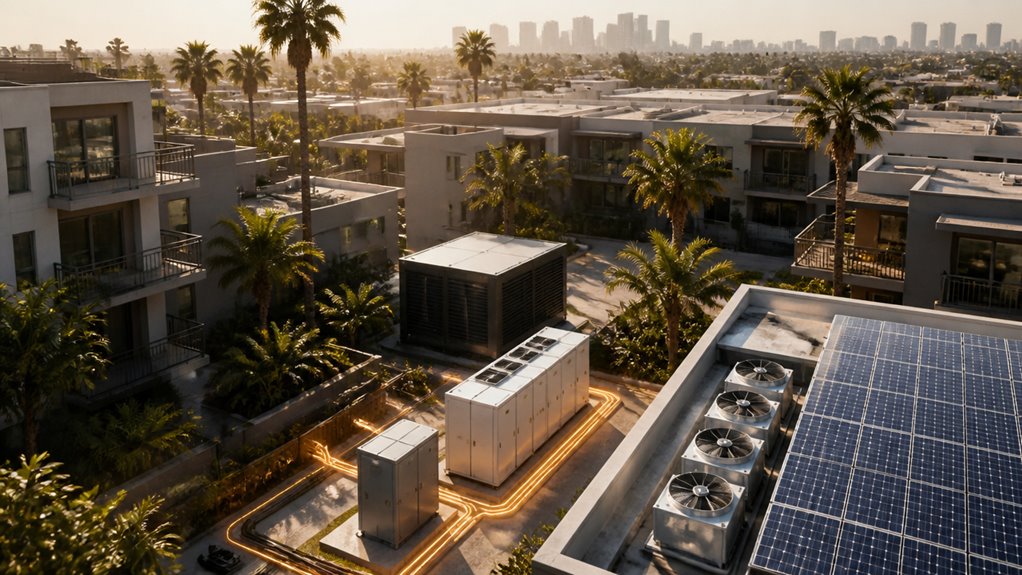
For HOAs, heat wave backup power means having a reliable way to keep critical cooling systems running when the grid goes down during extreme heat. In Los Angeles, outages during heat waves can push indoor temperatures above 82°F, raising health risks for residents and increasing emergency room visits. You need backup power to help your property stay within local temperature rules and protect vulnerable tenants. It also supports cooling strategies that keep shared spaces safer when demand spikes. Local resilience efforts show that multifamily buildings benefit when you plan ahead, because reliable power helps HVAC equipment continue operating during dangerous weather. Adding fire alarm testing and other life-safety system checks alongside your backup strategy helps ensure critical alerts and suppression readiness remain dependable during extreme events.
Which Circuits Need Backup First
Which circuits should an HOA back up first during a heat wave?
Start with medical equipment, refrigerators, and cooling systems, because these protect health and food safety.
Next, cover HVAC systems, since indoor cooling helps prevent heat-related illness for residents who are older, ill, or disabled.
Then add common-area circuits, including hallways, elevators, and emergency lighting, so people can move safely and responders can enter quickly.
You should also include communication circuits, which keep residents informed about outages, shelter plans, and restoration updates.
Before you finalize backup power, check the electrical load so the selected circuits won’t overload existing infrastructure.
Just as routine maintenance helps ensure fire extinguishers work when needed, periodic inspection of your backup generator and transfer equipment helps you avoid failures during peak heat conditions.
Battery Storage vs. Generator Backup
When an HOA weighs battery storage against generator backup, the best choice often depends on safety, runtime, cost, and site conditions during a heat wave.
You may find battery storage better for long-term resilience because it runs quietly, produces no emissions during use, and reduces reliance on fossil fuels. You can also charge it with renewable energy, which lowers your building’s carbon footprint.
Generators often cost less upfront, but they create noise, require fuel deliveries, and need more maintenance over time.
In contrast, battery systems can lower operating costs over the years. For multifamily buildings and HOAs, that cleaner profile can matter when you want reliable backup without adding local pollution.
How Backup Power Keeps Cooling Running

Backup power keeps your cooling systems running when an outage hits, so air conditioners and heat pumps can keep indoor temperatures safer during extreme heat.
In Los Angeles, where hot days are becoming more common, that support can help you stay below county temperature limits and reduce the risk of heat-related illness.
For HOAs and multifamily buildings, a resilient backup plan gives you a practical way to protect tenants and maintain cooling during long blackouts.
Backup Power Essentials
During extreme heat in Los Angeles, backup power systems like generators and battery storage help keep cooling equipment running during outages, so indoor temperatures stay safer for people who depend on air conditioning.
You need backup power because grid strain can interrupt service when temperatures rise. Reliable backup power helps your building maintain air conditioning during outages, especially when heat-related illnesses become more likely above 82°F indoors.
In multifamily properties, it also supports residents who may be more vulnerable.
- It reduces risk during peak heat days.
- It supports low-income and multigenerational households.
- It strengthens community resilience when the grid fails.
When you plan ahead, you protect comfort, continuity, and health in one practical step.
Cooling During Outages
If a power outage hits during extreme heat, backup power can keep air conditioning and other cooling systems running so indoor temperatures stay safer. In Los Angeles, that matters because hot days can quickly raise health risks, especially for older adults, children, and people with chronic illness. With generators or battery storage, you can support cooling during outages and help your building stay within the county’s 82°F limit. In multifamily properties, centralized backup power can serve several units at once, improving comfort and reducing strain on vulnerable residents. Reliable cooling also helps lower the chance of emergency room visits linked to heat exposure. To further protect safety during emergencies, plan for coordinated responses that include fire drill practice so occupants know what to do if an incident occurs while cooling systems are operating.
Resilient HOA Systems
When a heat wave pushes indoor temperatures upward, resilient HOA systems help keep cooling equipment running even if the grid goes down.
You can rely on backup power systems, like solar batteries or generators, to support vents, fans, and central air when demand spikes.
This matters because rising indoor heat can trigger heat-related illnesses, especially for older adults, children, and low-income residents with few cooling options.
It also helps you stay within the county rule that keeps interiors below 82°F.
- Maintain cooling during outages
- Protect vulnerable residents
- Support compliance and resilience
Heat Wave Backup Power for Multifamily Buildings
Multifamily buildings often rely on aging electrical and cooling infrastructure, so a heat wave plus a power outage can quickly leave residents without adequate relief.
You should plan backup power for elevators, lighting, ventilation, and cooling, because these systems protect health and mobility. The Los Angeles Department can help you understand local readiness goals, while utility coordination improves access to temporary generation and load support.
In low-income neighborhoods, where heat illness risks run higher, reliable backup power matters even more. Your emergency plan should pair mobile cooling options with powered common areas, so vulnerable residents have a place to recover.
The County Heat Action Plan supports these measures, and you can strengthen resilience by testing systems before extreme heat arrives, not after.
L.A. Rebates, Permits, and Eligibility
If you’re planning a heat pump or cooling upgrade in Los Angeles, you’ll want to check whether your building qualifies for LADWP rebates and HOME LA incentives before you start.
Most programs require that your property be in LADWP’s service area, fit the building type rules, and receive approval before any construction or installation begins.
You’ll also need to handle the right permits and submit each application separately, since funds are limited and rebates are awarded on a first-come, first-served basis.
Rebate Eligibility
How can Los Angeles homeowners make the most of available rebates? Start by checking rebate eligibility and matching your project to current Incentive Programs. If you own property in the LADWP service territory, you may qualify for support that lowers upfront costs for electrification and efficiency upgrades.
Eligible projects can include heat pump water heaters, all-electric systems, feasibility studies, and pilot work.
- Confirm the program accepts your project type.
- Get prior approval from LADWP before you begin.
- Finish the work within 48 months of approval.
Because many rebates are first-come, first-served, you should apply early and keep your documentation organized.
You may also find extra incentives for resiliency upgrades, especially in sensitive buildings like schools or senior housing.
Permit Requirements
Before you install a backup power system for heat waves in Los Angeles, you’ll need to account for city permit requirements and the rebate rules that can affect your project.
You should work with the Los Angeles Department of Building and Safety to confirm zoning, electrical, and fire safety approvals before any installation starts.
If you want LADWP incentives, check that your property sits in the Angeles Department of Water and Power service territory and that your system meets current efficiency criteria.
You’ll also need to submit permit and rebate applications on time, since funding is first come, first served.
Review the latest LADWP guidelines early, and make sure your plans match both city and utility standards so your project stays eligible and avoids costly delays.
How to Schedule Installation Before Heat Season
To stay ahead of peak heat, schedule backup power installation in late spring, when contractors still have availability and your building can still be evaluated and upgraded without rushing.
You should hire licensed contractors early to review electrical wiring, confirm load capacity, and match backup power systems with your cooling needs.
Lock in contracts and order equipment now, since summer demand can delay delivery and installation.
- Apply for TECH Clean California’s Quick Start Grant to offset studies and installation.
- Hold resident briefings so everyone understands outage plans and cooling priorities.
- Verify that any electrical upgrades support new air-conditioning loads before work starts.
Frequently Asked Questions
What Is the Number One Weather Killer?
Extreme heat is the number one weather killer, and you should treat it as a serious safety threat.
Climate change is raising temperatures, while urban heat can make buildings dangerously hot.
You need reliable cooling, backup power, and clear emergency plans to protect residents, especially during heat waves.
Keep indoor temperatures below 82°F when possible, monitor vulnerable people, and maintain systems that support health, fire protection, and life safety.
How Hot Will LA Be in 2050?
By 2050, you can expect Los Angeles to be about 5-8°F hotter on average at peak temperatures, with more frequent, longer heat waves.
In this future climate, urban heat will intensify, especially in dense neighborhoods and low-income areas.
Since 1970, the city’s already added about nine extra hot days each year.
You should plan for more extreme heat, stronger cooling needs, and greater health risks.
What Is the Heat Measure for Rental Housing in Los Angeles?
The heat measure is a maximum indoor temperature of 82°F, a gentle safeguard that helps you avoid a harsher situation.
Under local rental regulations, landlords in unincorporated Los Angeles must keep rental housing at or below that level during extreme heat.
You can see this as part of tenant rights, and landlords should use passive cooling first before adding air conditioning, with compliance steps expected by January 1, 2027.
How to Keep an Elderly Person Cool?
You can keep an elderly person cool by using Elderly care cooling strategies: close blinds, run fans, and keep the indoor temperature below 82°F.
Offer water often, because hydration supports Heat safety during hot weather.
If the home gets too warm, move them to a cooling center or air-conditioned space.
Build Emergency plans now, so you can act fast when temperatures rise and cooling fails.
Wrapping It Up
Planning backup power before a heat wave helps you protect residents, preserve cooling, and reduce outage risks. You might think the cost isn’t worth it, but targeted battery or generator support for critical circuits can prevent far greater damage and discomfort during an extended shutdown. In Los Angeles, rebates and permitting can also improve project value. When you schedule early, you give your HOA or multifamily property the best chance to stay safe and operational.