Before you open, inspect the patio for dry leaves, branches, and blocked exits, then confirm tents and structures are flame-resistant. Keep grills, heaters, and fire pits at least 10 to 15 feet from combustibles and exits, with 3 feet of clearance around each unit. Store propane cylinders outside, upright, and secured, and place generators away from booths. Train staff on extinguishers, suppression systems, and clear escape routes, and more practical steps can help you tighten the plan.
Inspect Patio Fire Hazards Before Opening
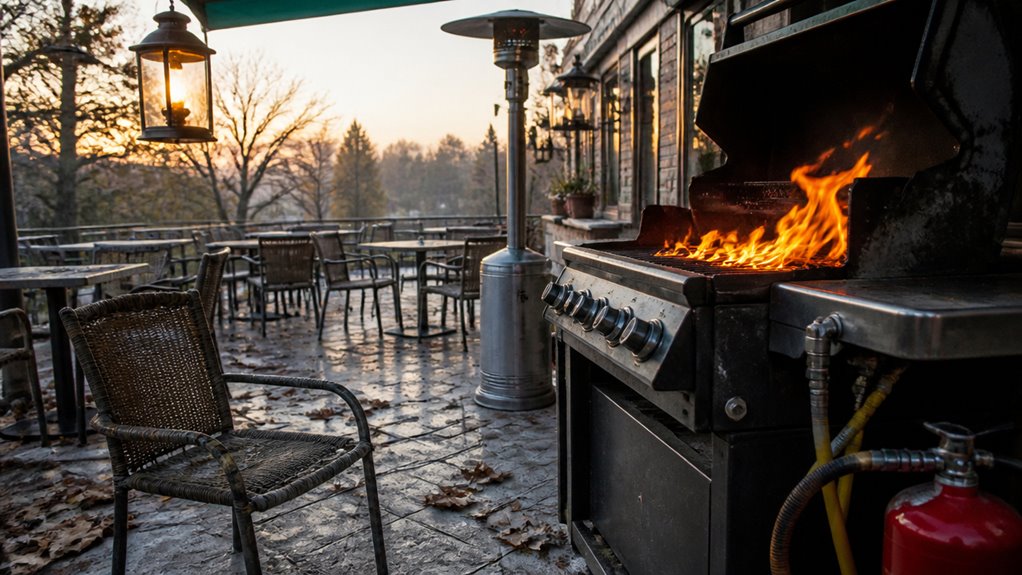
Before you open the patio to guests, inspect the area for fire hazards and correct anything that could fuel a flame or block safe exits.
For Fire Safety, clear dry leaves, sticks, and low-hanging branches, then verify all outdoor cooking equipment sits at least 10 feet from exits and combustibles.
Check that tents and structures are flame-resistant, and keep proof of that rating on file.
Make sure portable fire extinguishers are accessible, tagged by the State Fire Marshal, and sized so you have one for each 200 to 500 square feet.
Store propane cylinders outside the tent, secured upright, and at least ten feet from structures and pathways.
These steps help prevent cooking fires and support National Fire Protection Association guidance before service begins. For additional protection, arrange for a certified team to handle inspections and maintenance so your fire safety systems stay compliant in Los Angeles.
Set Grill and Heater Clearance Zones
Once you’ve cleared the patio of obvious hazards, set the grill and heater layout so it keeps heat away from combustible surfaces and open pathways.
Place outdoor fire and cooking equipment at least 10 feet from tents, structures, and exits, and keep clearance zones of at least 3 feet around each unit. This spacing helps you protect combustible materials, reduce accidental ignition, and support fire safety during crowded service.
Put portable heaters on flat, sturdy surfaces, and keep them out of high-traffic areas where they could tip or block movement.
Check the ground and nearby edges for dry leaves, branches, or other debris, then remove them quickly.
You should also preserve emergency access by keeping fire lanes and exits fully open and easy to reach.
For extra assurance, schedule routine fire extinguisher services and related inspections so your equipment is ready when holiday crowds bring higher risk.
Follow Patio Grill and Cooking Rules
As you set up patio grilling and cooking stations, keep every appliance at least 10 feet from exits and combustible materials. Make sure outdoor fire pits stay at least 15 feet from any structure. You’ll reduce the chance of fires when you place cooking equipment in approved spaces, keep combustible items away, and leave enough room for workers and guests. state-of-the-art life safety systems also support early detection and quicker response when an incident does happen.
Follow local fire rules for vendor layouts, because safe spacing supports better fire safety and smoother service. Keep fire extinguishers visible and ready in the cooking area, with coverage based on floor size, so you can respond fast if a flare-up starts.
- Check clearance before you light anything
- Protect exits, walls, and combustible items
- Confirm fire extinguishers meet local fire rules
Store Propane Tanks and Generators Safely
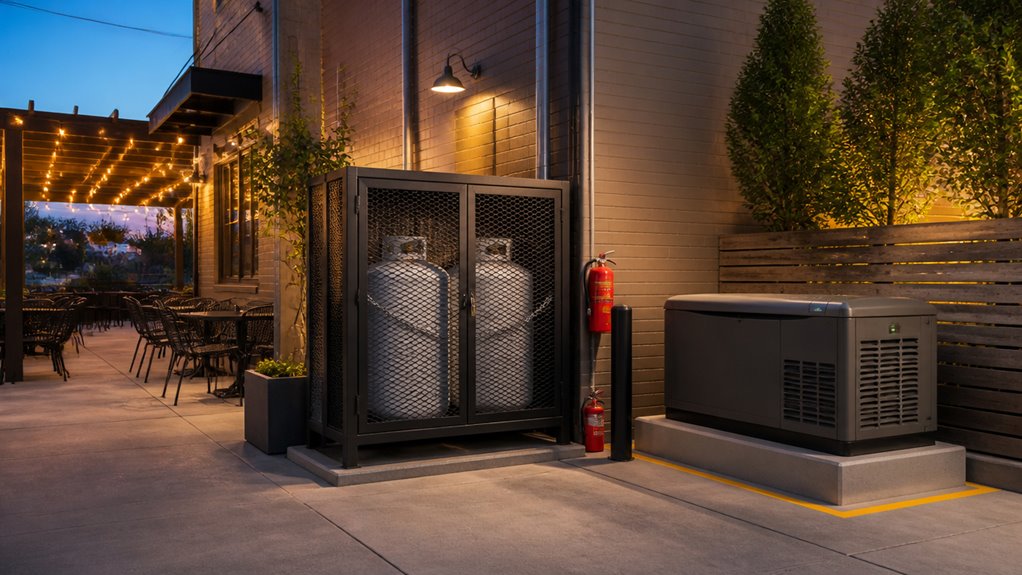
Store propane tanks and portable generators in approved areas where they can’t create new fire hazards.
You should store propane tanks outside tents and structures, at least five feet from appliances and ten feet from exits and pathways, so the area stays safe.
Keep cylinders upright, secured, and limited to D.O.T.-approved units in good condition; follow booth limits of 20 gallons for 10 x 10 spaces and 40 gallons for 10 x 20 spaces.
Place generators at least ten feet from food booths and exits, and refuel them only when the public is absent, at least twenty feet from structures.
Keep one visible 20-B fire extinguisher with each generator, so you can respond quickly to a cooking fire or other incident.
Train Staff on Fire Response and Exits
Train staff to respond quickly and in the right order when a fire starts, beginning with activation of the fire suppression system before anyone uses a portable extinguisher. You should train staff to trigger the fire alarm, guide guests away from cooking or warming areas, and call the Fire Department without delay.
- Hold regular drills so everyone knows emergency exits and assigned roles.
- Keep fire extinguishers, exit signs, and emergency exits visible, marked, and unobstructed.
- Review the incident plan after drills and real events, then update it with what you learn.
When you train staff this way, you reduce confusion, speed evacuation, and limit re-ignition risks. Clear routes and practiced actions help your team protect people, equipment, and the patio area during busy holiday service.
Frequently Asked Questions
What Are the 4 P’s of Fire Safety?
The 4 P’s of fire safety are prevention, preparation, protection, and prompt response.
You should start with a risk assessment, then build emergency plans, maintain equipment, and support staff training.
Fire drills help you test those plans and improve readiness.
Fire safety works best when you reduce hazards, keep exits clear, use proper extinguishers, and act quickly if a fire starts.
Regular checks keep your system effective and reliable.
What Are the 5 E’s of Fire Safety?
The 5 E’s of fire safety are Education, Engineering, Enforcement, Emergency response, and Evaluation.
You use fire prevention strategies, cooking equipment safety, and outdoor fire regulations to reduce risk.
You also build emergency evacuation plans, provide fire extinguisher training, and apply risk assessment techniques.
Like a sturdy shield, these steps help you detect hazards early, control flames, and protect people and property before a small spark grows dangerous.
Does a Grill Count as an Open Fire?
Yes, you should treat a grill as an open flame for grill regulations. It creates heat and direct flame, so flame containment matters during outdoor cooking.
You need a risk assessment, proper placement, and any required safety permits. Keep fire extinguishers nearby, maintain shutoff valves and approved regulators, and never leave it unattended.
Local rules may vary, so you should check them before you cook.
What Are the Safety Tips for Christmas Cooking?
For Christmas cooking, you should stay in the kitchen, keep a Kid Free Zone, and use timers so food doesn’t overcook.
Practice fire extinguisher training, check kitchen equipment safety, and keep flammable items away from burners.
Follow safe food storage rules, watch cooking oil hazards during frying, and use family cooking tips like planning ahead.
If you fry a turkey, do it outdoors, with the fryer filled correctly and never unattended.
Wrapping It Up
By checking hazards, setting safe clearances, following cooking rules, securing fuel sources, and training your team, you reduce the risk of a patio fire during busy holiday service. Keep every control in place, because careful planning prevents fast-moving flames and protects guests, staff, and property. Make fire safety a constant priority, not a casual concern, so your patio stays prepared, protected, and properly managed when crowds, cooking, and heat all converge.